
How Much Does HVAC Repair Cost in 2026?
HVAC repair costs range from $150 to $2,000+ depending on your system type and the specific repair needed. Most homeowners pay around $350. Here’s the complete breakdown.
Compare HVAC Quotes
Average HVAC Repair Cost in 2026
The average residential HVAC system lasts between 15 and 25 years, and during that time, you can expect to need at least a few repairs to keep things running smoothly. You shouldn’t need to worry about a full HVAC replacement before that window closes — but regular repairs and maintenance are a necessary part of homeownership.
In 2026, homeowners can expect to pay $150 to $2,000 for most HVAC repairs, with a national average of approximately $350. The exact cost depends on several key factors:
- The specific problem with your heating or cooling system
- The replacement parts needed for the repair
- The HVAC company you hire and their labor rates
- How long the repair takes to complete
- Any additional issues the technician discovers during the service visit
Furnace repairs tend to cost a bit less than air conditioning repairs on average. Most furnace repair jobs come in around $125 to $480, while AC repairs typically range from $150 to $650. However, major component failures on either system can push costs well above $1,000.

HVAC Repair Cost by Repair Type
When individual HVAC components fail, the cost to fix them varies widely depending on the part, its importance to the overall system, and how long the repair takes. Below is a comprehensive breakdown of the most common HVAC repairs and what they typically cost in 2026.
| Repair Type | Average Cost |
|---|---|
| Thermostat Replacement | $25 – $350 |
| AC Tune-Up | $70 – $200 |
| Drain Line Cleaning | $75 – $200 |
| Flame Sensor Repair | $75 – $250 |
| Capacitor Replacement | $100 – $250 |
| HVAC TXV Valve | $100 – $500 |
| Circuit Board Replacement | $100 – $600 |
| Refrigerant Recharge (Freon) | $100 – $600 |
| Ignitor Replacement | $150 – $300 |
| Damper Motor Replacement | $100 – $350 |
| Blower / Fan Motor Replacement | $150 – $700 |
| AC Fan Motor Replacement | $200 – $700 |
| Evaporator Coil Repair | $200 – $1,500 |
| Refrigerant Leak Repair | $250 – $1,500 |
| Duct Cleaning | $250 – $1,000 |
| Duct Repair | $500 – $2,000 |
| Coil Replacement | $600 – $2,400 |
| Compressor Replacement | $800 – $3,000 |
| Condenser Coil Replacement | $900 – $2,300 |
| Heat Exchanger Replacement | $1,000 – $3,500 |
Always get at least two or three quotes before committing to any HVAC repair over $500. Pricing can vary significantly between companies, and comparing HVAC quotes is the single best way to avoid overpaying.
Furnace Repair Costs
Your furnace handles the heating side of your HVAC system, and it contains several components that can wear out over time. Here are the most common furnace repairs and what they typically cost.
Furnace Blower Motor Repair – $150 to $700
The blower motor is responsible for pushing warm air through your home’s ductwork. When it fails, you’ll notice weak airflow or no heat at all. Depending on whether the motor can be repaired or needs full replacement, you can expect to pay $150 to $700.
Furnace Flame Sensor Repair – $75 to $250
The flame sensor monitors the pilot light in your furnace to ensure it stays lit. A faulty flame sensor can prevent your furnace from igniting. A simple cleaning may cost under $100, while a full replacement typically runs up to $250.
Furnace Circuit Board Repair – $100 to $600
The circuit board controls power distribution to every component in your furnace. When it fails, the entire furnace may not turn on. A minor repair may cost as little as $50, but replacing the full board runs between $300 and $600.
Furnace Damper Motor Repair – $100 to $350
The damper controls how much air flows through your HVAC system. When the damper motor goes bad, your furnace can’t regulate airflow properly. Replacement typically costs between $100 and $350.
Furnace Heat Exchanger Repair – $1,000 to $3,500
The heat exchanger uses metal coils to heat the air that flows through your HVAC system. This is one of the most expensive furnace repairs. A cracked heat exchanger also poses a safety risk due to potential carbon monoxide leakage. Replacement costs range from $1,000 to $3,500+, and in many cases, it may make more sense to replace the entire furnace.
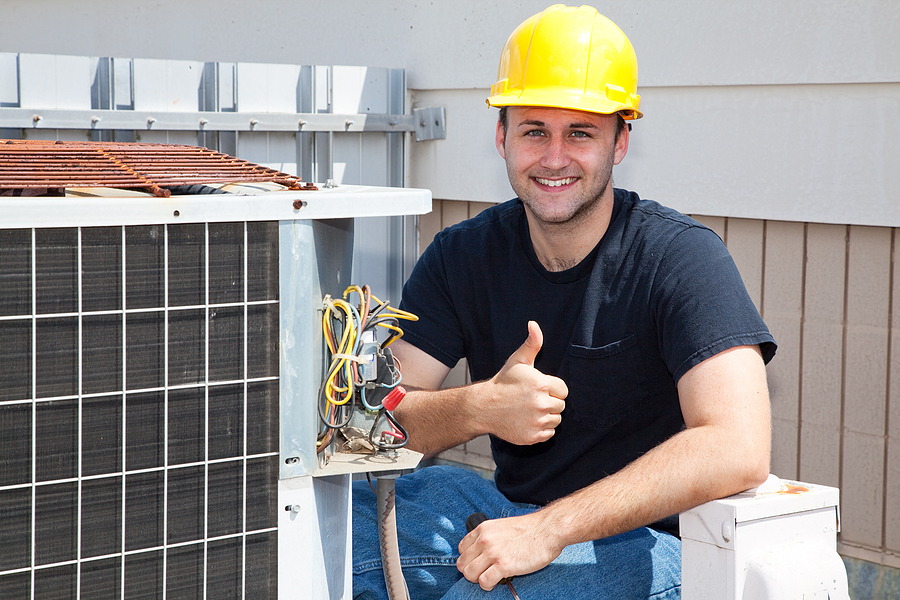
A cracked or damaged heat exchanger can leak carbon monoxide into your home. If you notice unusual odors, strange loud noises, or performance issues with your heating system, turn off the system and call a professional immediately.
 Compare Furnace Repair Quotes
Air Conditioning Repair Costs
Air conditioning repairs tend to cost slightly more than furnace repairs, especially when major components like compressors or condenser coils are involved. Here are the most common AC repairs and their costs.
AC Compressor Repair – $800 to $3,000
The compressor is the heart of your air conditioning system. It removes heat and humidity from your home while compressing the refrigerant that produces cool air. Because of its critical role and complexity, compressor repair or replacement is one of the most expensive HVAC repairs, typically costing between $800 and $3,000.
AC Fan Motor Repair – $200 to $700
The AC fan motor handles two jobs: blowing cold air into your home and pushing warm air outside. When it fails, your cooling system can’t function properly. Replacing an AC fan motor typically costs between $200 and $700.
AC Condenser Coil Repair – $900 to $2,300
Located outside your home, the condenser coil removes heat and humidity from inside your house. When the condenser stops working properly, it usually needs to be replaced entirely, which can cost between $900 and $2,300.
AC Evaporator Coil Repair – $200 to $1,500
The evaporator coil sits inside your home and absorbs heat and humidity before transmitting it to the condenser unit outside. Repairs can be as affordable as $200, but full replacement can reach $1,500 or more.
AC Refrigerant Recharge – $100 to $600
Refrigerant (commonly referred to as Freon) is the chemical that allows your AC system to produce cool air and remove heat. Over time, it needs to be recharged. The cost depends on how much refrigerant your system needs, typically running $100 to $600.
Thermostat Repair or Replacement – $25 to $350
Your thermostat controls your entire HVAC system. A malfunctioning thermostat can prevent both heating and cooling from working properly. Basic models can be replaced for as little as $25, while advanced smart thermostats can cost several hundred dollars.

HVAC Repair Cost by Unit Type
The type of HVAC system you have is one of the biggest factors in your repair cost. Central air conditioning systems tend to be the most expensive to repair, while mini-split systems are often the most affordable.
| HVAC Unit Type | Common Issues | Average Repair Cost |
|---|---|---|
| Central AC | Drain clogs, compressor failure | $450 – $2,000 |
| Furnace | Mineral buildup, clogged valves | $130 – $1,200 |
| Heat Pump | Dirty coil, broken fan motor | $200 – $2,000 |
| Ductless Mini-Split | Refrigerant leak, compressor issue | $300 – $550 |
| Split System | Compressor malfunction, motor failure | $200 – $300 |
| Packaged System | Electrical issues, thermostat problems | $450 – $550 |
Factors That Affect HVAC Repair Cost
Several factors determine what you’ll ultimately pay for an HVAC repair. Understanding these factors can help you anticipate costs and make more informed decisions.
Labor Rates
HVAC technicians charge $75 to $250 per hour in 2026, and labor can account for up to 50% of the total repair cost. Most HVAC companies also charge an initial service call or diagnostic fee of $75 to $200, which is often applied toward the first hour of labor if you proceed with the repair.
Parts and Materials
The specific components that need repair or replacement have a huge impact on cost. A simple capacitor swap might cost $100 in parts, while a compressor replacement can run $800+ in parts alone. In 2026, material costs have increased roughly 3–6% compared to 2025 due to supply chain factors.
System Age and Condition
Older HVAC systems are more prone to breakdowns and may require hard-to-find replacement parts, which increases both labor time and costs. Systems over 15 years old generally cost more to repair.
Geographic Location
Repair costs vary by region. Urban areas with higher costs of living typically have higher HVAC labor rates. Climate also plays a role — in hotter states, AC repairs are more common and may be priced competitively, while furnace repairs may be more common (and sometimes pricier) in colder regions.
| State | Average HVAC Repair Cost |
|---|---|
| California | $575 |
| New York | $500 |
| New Mexico | $480 |
| Pennsylvania | $430 |
| Washington | $425 |
| Idaho | $375 |
| North Dakota | $380 |
| Wisconsin | $360 |
| Florida | $330 |
| Texas | $330 |
Emergency vs. Scheduled Repairs
Emergency HVAC repairs — those made after business hours, on weekends, or during holidays — typically cost 20% to 50% more than scheduled repairs. An HVAC tech may charge an additional $40 to $80 per hour for after-hours work, or a flat emergency surcharge of $100 to $300.
Permits and Inspections
Certain HVAC repairs, particularly those involving ductwork replacement or new equipment installation, may require a permit. HVAC permits typically cost $250 to $400. A ventilation inspection runs between $80 and $450.
HVAC Maintenance Cost
Routine maintenance is the best way to prevent costly HVAC repairs and extend the lifespan of your system. Maintaining a furnace or air conditioning unit typically costs between $75 and $200 per visit, depending on what the technician needs to do.
How Often Should You Have Your HVAC Maintained?
Most HVAC professionals recommend servicing your system at least once per year. Ideally, you should schedule maintenance twice each year — once before winter for your furnace and once before summer for your air conditioner. This ensures both systems are ready for the season ahead.
When you follow a regular maintenance schedule, you’ll catch small issues before they become expensive repairs, keep your system running at peak efficiency (which lowers energy bills), and potentially extend the life of your system by 5 to 10 years.
What’s Included in HVAC Maintenance?
During a standard HVAC maintenance visit, a technician will typically:
- Vacuum out dirt, dust, and debris from the inside of the system
- Clean coils, drains, and other key components
- Inspect the thermostat, motors, and all electrical connections
- Lubricate all moving parts
- Test safety controls and overall system performance
- Check refrigerant levels and recharge if necessary (additional cost)
After the maintenance visit, the technician will let you know if any repairs are recommended and provide information about your system’s overall health.
HVAC Maintenance Contracts
Many HVAC companies offer annual maintenance contracts (also called service agreements) that include one or two tune-ups per year, priority scheduling, and discounts on parts and labor. These contracts typically cost $150 to $500 per year and can pay for themselves by preventing unexpected breakdowns.
Compare Maintenance QuotesShould You Repair or Replace Your HVAC System?
This is one of the most important decisions a homeowner can face when dealing with HVAC problems. Here’s how to decide.
| Average Repair Cost | Average Replacement Cost | |
|---|---|---|
| Air Conditioner | $150 – $1,000 | $3,800 – $7,500 |
| Furnace | $130 – $500 | $2,600 – $6,200 |
| Full HVAC System | $150 – $2,000 | $7,500 – $15,500 |
A common rule in the HVAC industry is: if the repair costs more than 50% of the price of a new system, and your system is over 15 years old, replacement is usually the smarter long-term investment. This is especially true if your system has been requiring more frequent repairs.
Consider replacing your HVAC system if:
- It’s more than 15 years old and requires frequent repairs
- Repair costs exceed 50% of the cost of a new system
- Your energy bills have increased significantly
- Your system uses R-22 refrigerant (Freon), which has been phased out
- Rooms in your home are consistently too hot or too cold
Consider repairing if:
- Your system is under 10 years old
- The repair is minor (under $500)
- It’s the first significant repair the system has needed
- The system has been well maintained
Learn more about full system replacement costs in our HVAC replacement cost guide.
How to Diagnose Common HVAC Problems
Before calling a technician, there are a few simple things you can check that might solve the issue — or at least help you describe the problem more accurately when you call for service.
- Check your electrical panel — Make sure the breaker for your HVAC system hasn’t tripped. Resetting it may restore power.
- Check your thermostat — Ensure it’s set to the correct mode (heating or cooling), the temperature is set correctly, and the batteries are fresh if applicable.
- Replace the air filter — A clogged filter can restrict airflow and cause your system to underperform or shut down. This is one of the most common (and cheapest) fixes.
- Inspect the outdoor unit — Check for debris, leaves, or ice buildup around the condenser unit outside your home.
- Listen for unusual sounds — Grinding, banging, or squealing noises can indicate specific component failures that help a technician diagnose the issue faster.
- Call a professional — If the above steps don’t resolve the issue, contact an HVAC company to diagnose and repair the problem.
Don’t continue running your HVAC system if it’s making strange noises, producing unusual odors, or clearly not working properly. Continuing to run a malfunctioning system can worsen the damage and lead to more expensive repairs.
How to Save Money on HVAC Repairs
HVAC repairs can strain your budget, but there are several strategies to keep costs manageable:
- Schedule regular maintenance — Annual or biannual tune-ups catch small issues before they become expensive repairs.
- Change your air filters regularly — Replace filters every 1 to 3 months to maintain proper airflow and reduce strain on your system.
- Compare multiple quotes — Always get at least 2–3 estimates before committing to a repair, especially for jobs over $500.
- Consider a maintenance contract — Service agreements often include discounted repair rates and priority scheduling.
- Keep the area around your outdoor unit clear — Remove debris, trim vegetation, and ensure adequate airflow around the condenser.
- Address problems early — Ignoring small issues leads to bigger, more costly repairs down the road.
- Ask about warranties — Check if the repair is covered under your system’s manufacturer warranty or a home warranty plan.
- Schedule repairs during off-peak seasons — Spring and fall are typically less busy for HVAC companies, and you may find better pricing.
Schedule an HVAC Repair
If your home’s furnace or air conditioning isn’t working properly, the best course of action is to find a qualified HVAC company that can diagnose the problem and provide a fair estimate. Your total HVAC repair cost will depend on what the technician finds during the inspection.
Once the repair is complete, make HVAC maintenance a priority moving forward so you can avoid encountering additional costly repairs in the future. Check out our guides on HVAC replacement costs and everything you need to know about HVAC systems for more helpful information.
Frequently Asked Questions About HVAC Repair Cost
HVAC repair costs range from $150 to $2,000 in 2026, with most homeowners paying around $350 on average. Minor repairs like thermostat replacements cost $100 to $300, while major repairs such as compressor or heat exchanger replacement can cost $1,000 to $3,500.
Furnace repair costs range from $125 to $1,200 depending on the component. Common repairs include blower motor replacement ($150–$700), flame sensor repair ($75–$250), circuit board replacement ($100–$600), and heat exchanger replacement ($1,000–$3,500).
Air conditioning repair costs typically range from $150 to $2,000. Common AC repairs include compressor replacement ($800–$3,000), fan motor replacement ($200–$700), condenser coil replacement ($900–$2,300), and refrigerant recharge ($100–$600).
HVAC maintenance costs $75 to $200 per visit for a standard tune-up. Annual maintenance contracts cost $150 to $500 per year and typically include one or two tune-ups, priority scheduling, and discounted repair rates.
HVAC technicians charge $75 to $250 per hour in 2026. Most companies also charge a diagnostic or service call fee of $75 to $200, which is usually applied toward the cost of repairs if you hire them for the job.
Consider replacing your HVAC system if it’s over 15 years old, repair costs exceed 50% of the cost of a new system, you’re experiencing frequent breakdowns, or your energy bills have increased significantly. A new HVAC system costs $7,500 to $15,500 on average.
HVAC professionals recommend maintenance at least once per year. Ideally, schedule service twice yearly — have your furnace checked before winter and your AC checked before summer. Regular maintenance can extend your system’s lifespan and help prevent costly breakdowns.
Yes. Emergency HVAC repairs made after business hours, on weekends, or during holidays typically cost 20% to 50% more than scheduled repairs. Expect to pay an additional $40 to $80 per hour or a flat emergency surcharge of $100 to $300.
Most residential HVAC systems last between 15 and 25 years when properly maintained. Regular annual maintenance, prompt repairs, and consistent filter changes can help you reach the upper end of that range.