
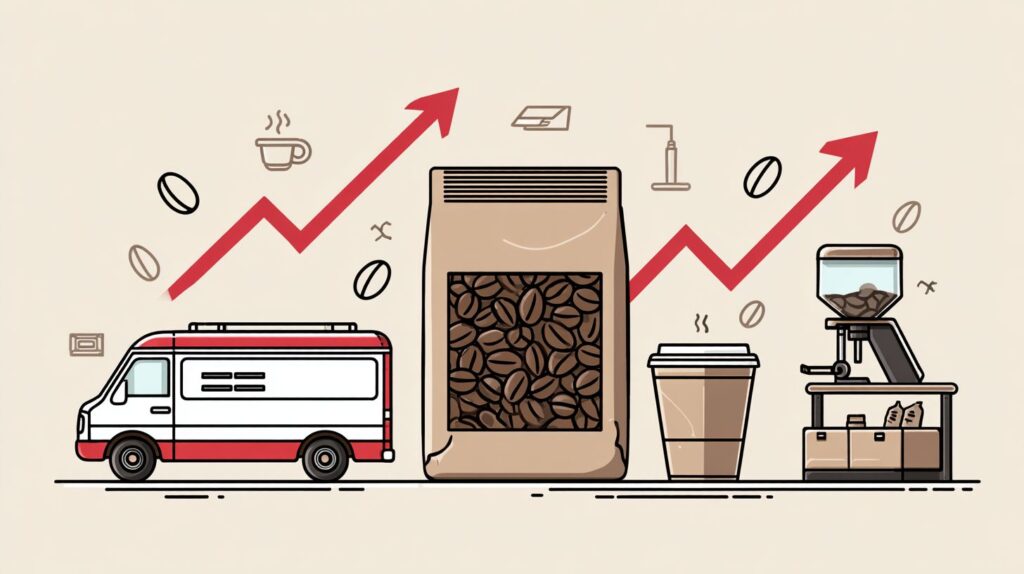
What Impacts the Price of Office Coffee Service More Than the Coffee Itself
Discover what impacts office coffee service prices more than coffee itself: delivery logistics, equipment maintenance, staffing, and hidden fees. Uncover industry secrets from NCA data and slash your bill today.
Ever stared at your office coffee service bill and wondered why it’s sky-high despite cheap beans? I’ve crunched the numbers from industry reports like the National Coffee Association’s data, and spoiler: coffee’s just 20% of the cost. Delivery routes, equipment maintenance, custom add-ons, staff volume, location factors, and hidden hidden fees drive the real coffee price impacts. Curious what your setup’s costing extra? Let’s break it down.
Service Delivery and Logistics
Delivery logistics account for 35-50% of total service costs per National Coffee Association data. These expenses often outweigh the coffee itself in office coffee service pricing. Factors like routes, fuel, and staffing drive up bills more than bean quality or blends.
Vendors price delivery differently based on location factors, urban delivery costs, rural surcharges. Office managers can cut costs by knowing these areas. The next sections break down four main ones.
Focus on delivery frequency, route efficiency, fuel prices, and driver pay. Negotiating here impacts your bottom line. Track usage patterns to align deliveries with real needs in your office.
Many offices overlook how logistics expenses add up over time. Simple changes, like batching routes or capping surcharges, make a big difference. This keeps coffee service affordable without skimping on quality.
Frequency of Deliveries
Weekly deliveries cost $45-75/visit vs bi-weekly at $35-55 for 50-employee offices with specific employee count and office size. More frequent stops mean higher delivery fees in office coffee service. Match frequency to your team’s actual consumption to avoid overpaying.
Consider office size and usage data when choosing schedules. Smaller teams might thrive on bi-weekly drops, while high-volume spots need weekly refills. Track coffee use over a month to find the sweet spot.
| Frequency | Cost/Visit | Annual Total | Best For |
|---|---|---|---|
| Daily | $90 | $23,400 | Large offices, high peak demand |
| 2x/week | $60 | $6,240 | Medium teams, steady usage |
| Weekly | $45 | $2,340 | Standard 50-employee setups |
| Bi-weekly | $35 | $910 | Low-volume, tracked consumption |
One tech firm saved $2,800/year by switching to bi-weekly after usage tracking. Review your refill schedules quarterly. Adjust for hybrid work or seasonal shifts to control service costs.
Delivery Route Efficiency
Route optimization software cuts delivery costs 20-30% per Route4Me case studies on route efficiency. Inefficient paths rack up miles and time in office coffee service. Smart planning groups make stops to cut costs.
Start with a three-step process for better routes. First, map office clusters using tools like Google Maps and Route4Me for $19/month. This shows natural groupings in your area.
Next, batch deliveries with 5+ stops per route. Then, negotiate per-route pricing at $25-40 per stop with vendors. A multi-office client saved $4,200/year by consolidating this way.
Share your locations with suppliers early. Ask about their routing tech. This reduces fuel surcharges and ties into broader logistics expenses for your coffee service.
Fuel and Transportation Costs
Fuel represents 15-22% of delivery costs due to fluctuating fuel prices; 2023 diesel average added $0.18/cup. Rising prices directly hit office coffee service bills through surcharges. Vendors pass these on, so watch contract terms.
Break down the main hits with this chart. Fuel takes 20%, vehicle maintenance 12%, and depreciation 8%. These add up faster than coffee price impacts.
| Cost Type | Percentage of Delivery Costs |
|---|---|
| Fuel | 20% |
| Vehicle Maintenance | 12% |
| Depreciation | 8% |
Negotiate smart: ask for fuel surcharge caps at max 5% and electric van discounts. One vendor passed on an 18% fuel hike in Q3 2023. Lock in terms to shield against fluctuations in transportation costs.
Pair this with route tweaks for best results. Discuss urban premiums or rural delivery challenges upfront. This keeps service costs steady amid global coffee prices and supply chain shifts.
Driver and Logistics Staffing
Driver wages rose 17% since 2021 (BLS data) due to rising labor costs, adding $0.12-0.25 per cup delivered. Labor makes up a big chunk of office coffee service pricing. Vendors build this into your rates.
Key cost factors include base wage at $22/hour, benefits at 25%, and $500 per driver for training. These drive up delivery fees more than the coffee itself.
| Cost Factor | Details |
|---|---|
| Base Wage | $22/hr |
| Benefits | 25% of wage |
| Training | $500/driver |
Vendors cut costs by cross-training staff or outsourcing peak routes. Regional minimum wage jumps directly increase service rates by 8-12%. Push for transparency in how labor costs affect your bill.
Review contracts for escalation clauses tied to wages. Factor in insurance premiums and overhead. This helps during negotiations and keeps logistics expenses in check for long-term savings.
Equipment Costs and Maintenance
Equipment machine leasing comprises 18-25% of contracts. Maintenance adds 8-12% annually. Brewers and urns make up the biggest upfront costs in office coffee service.
Many offices pick machine leasing to skip big upfront costs and use financing long-term discounts. This keeps cash flow steady for other needs. Providers often bundle service with lease payments.
Over time, these choices affect total coffee price impacts more than the coffee itself, considering factors like cup usage volume. Think about usage volume and office size when deciding. Preventive care cuts unexpected bills.
Next, look at leasing versus purchasing machines. Curious about how top office equipment like copiers can fit your budget through leasing? Then cover installation fees, regular servicing, and repair costs. Each step shapes your service costs.
Leasing vs. Purchasing Machines
Bunn brewer machine leasing: $45/month vs purchase $1,800 upfront + $300/year equipment maintenance. Leasing spreads costs over time. Purchasing demands a big initial hit.
| Aspect | Leasing | Purchasing |
|---|---|---|
| Monthly Cost | $45-89 (includes service) | $0 (after upfront) |
| Upfront Cost | $0 | $1,200-3,500 |
| Maintenance | Included | You handle repairs |
| 5-Year TCO | $3,240 total | $4,100 total |
For offices with under 100 employees based on employee count, machine leasing to save hassle. Larger spots might buy for customization. Match to your employee count and peak demand.
Leasing fits subscription models with easy upgrades. Buying ties you to one machine longer. Weigh against refill schedules and waste management needs.
Installation and Setup Fees
Professional installation fees ranges $250-750 per machine depending on electrical and plumbing setup charges. These fees add up fast in office coffee service. Plan ahead to control costs.
Hidden fees sneak in without checking transparent pricing. Use this checklist to spot them:
- Electrical upgrade ($400)
- Water line ($300)
- Cabinetry ($500)
- Signage ($150)
- Training sessions ($200/hr)
- Removal of old ($250)
- Permits ($100)
Negotiate to bundle into first month lease. Ask vendors about water filtration tie-ins. This cuts setup fees for break room integration.
Match setup to office size. Hybrid work models change needs. Get quotes covering furniture and hygiene protocols.
Regular Cleaning and Servicing
Quarterly descaling service contracts: $125-225/visit or $39/month maintenance contracts. Cleaning keeps brewers running smooth. It impacts long-term service costs more than coffee blends.
| Frequency | Cost per Visit |
|---|---|
| Monthly | $75 |
| Quarterly | $150 |
| Semi-annual | $275 |
DIY saves money short-term but risks breakdowns without proper sanitation protocols. Pros follow NSF health codes for sanitation. Descaling prevents most issues in coffee brewers and urns.
Pick frequency by consumption patterns. High-volume offices need monthly checks. Contracts lock in rates against inflation adjustments.
Repairs and Replacement Parts
Emergency brew repair averages $285 + $95/hour labor during technician visits; parts markup 40-60%. Sudden fixes hit hard in office coffee service. They drive up costs beyond the coffee itself.
Common repair costs include:
- Pump ($450)
- Thermostat ($280)
- Switch ($150)
Service contracts pay off with defined contract length. A $1,200/year plan saves $2,100 on emergency calls. One case showed office downtime costing $450/hour in lost productivity.
Opt for preventive maintenance over reactive repairs. Track technician visits in online portals. This fits scalability for growth or downsizing.
Customization and Add-On Features
Custom customization options add 22-38% to base pricing in office coffee service; employees value variety 3x more than cost. A SHRM study shows coffee perks boost retention rates 12% through workplace amenities. Premium add-ons create lock-in by matching specific tastes and preferences.
These options go beyond the coffee itself, packaging types, disposable cups, and drive up service costs through extra sourcing and setup. Companies often pick them to improve employee morale and keep staff happy. Think of it as investing in small perks like water filtration, bottled water service that make the break room management feel special.
Vendors charge more for customization options because they handle supplies inventory, delivery fees, and equipment rental matched to your needs. This includes everything from milk options to branded supplies. It turns a basic service into a personalized experience worth the markup compared to buying coffee supplies directly, Are Office Coffee Services Cheaper Than Buying Coffee Supplies?.
Service frequency and contract terms play a role too, as frequent refills for specialty items raise logistics expenses. Weigh these against productivity boosts from happier teams. Start by surveying your office size and consumption patterns to pick what fits.
Variety of Beverage Options
Oat milk (+$0.45/cup), flavored syrups, CBD syrups (+$0.78/serving), tea selections, hot chocolate, 8+ tea varieties (+15% total) push prices higher in office coffee service. Basic setups stick to coffee and creamer, but adding premium blends changes everything. Employees love the choice, even if it bumps up the cost per cup.
Consider pricing tiers that reflect this. Basic might cover commodity coffee at lower rates, while luxury tiers include espresso machines and alt milks.
| Tier | Inclusions | Cost per Cup |
|---|---|---|
| Basic | Coffee + creamer | $0.28 |
| Premium | 8 blends | $0.62 |
| Luxury | Espresso + alt milks | $1.12 |
Vendor margins hit 45% on specialty items like fair trade coffee, organic certification products or single origin beans. Talk to providers about bulk coffee supply to control costs. Match options to peak demand and refill schedules for best value.
Milk, Creamer, and Sweetener Types
Almond milk costs vendors $4.25/gallon vs dairy $2.10; passed on as $0.38/cup markup in many office coffee services with various creamers. Plant-based options trend up, adding noticeable expense over traditional dairy. Employees with dietary needs appreciate the variety.
Per-unit costs vary widely. Half & Half runs cheaper, oat milk pricier, and stevia packets stay affordable.
- Half & Half: $0.12 per unit
- Oat milk: $0.45 per unit
- Stevia packets: $0.08 per unit
Negotiate bulk deals to offset the premium on non-dairy creamers. Factor in waste management and storage for these ancillary products. Research suggests matching choices to employee count helps manage service costs effectively.
Disposable vs. Reusable Supplies
Biodegradable options like compostable cups at $0.18 each vs ceramic mugs ($45/set + $2,400 dishwasher lease) highlight big differences in office coffee service pricing. Disposables simplify cleanup but rack up over time. Reusables cut long-term costs if you handle the labor.
Look at total cost of ownership over a year. Disposables might total higher due to volume, while reusables add maintenance costs like technician visits.
| Option | 1-Year TCO |
|---|---|
| Disposables | $8,640 |
| Reusable | $3,960 + labor |
ESG pressure favors compostable items at a sustainability premiums, recycling programs, and eco-friendly initiatives at a premium, and hygiene concerns keep many on disposables. Check your break room setup for what works. Preventive maintenance on dishwashers can make reusables a smart pick for larger offices.
Branded Cups and Custom Packaging
Logo cups add $0.07-0.15/cup with custom packaging; minimum 10,000 unit orders ($4,500 setup) are common for office coffee services. These turn everyday supplies into marketing tools. They build brand loyalty right in the break room.
Tiers make it flexible. Stock cups stay basic, while custom prints ramp up the price.
- Stock cups: $0.10 each
- 1-color logo: $0.14 each
- Full-color: $0.22 each
Branded items increase client retention with visibility. Plan for setup fees and long-term contracts to lock in rates. Pair with personalized service like usage data reports for full impact on employee morale.
Volume and Contract Scale
A 50-employee office pays 28% more per cup than a 200-employee contract in office coffee service due to brand reputation and premium brands. Providers offer economies of scale that cut service costs far beyond the coffee itself. Larger setups mean better rates on delivery fees, equipment rental, and maintenance costs.
Volume discounts often start at 150+ employees, where bulk coffee supply drops in price. Multi-year contracts lock in these savings, shielding from fuel surcharges and logistics expenses. Small offices face higher per-cup costs due to minimum order requirements and less efficient route optimization.
Consider service frequency and refill schedules too. High-volume offices get predictable pricing with fewer service calls. Pair this with long-term deals for the biggest impact on overall coffee price impacts.
Experts recommend checking contract terms early including billing frequency, monthly invoicing, payment terms, and late fees. Negotiate based on employee count and usage volume to avoid urban premiums or rural delivery hikes. This approach keeps ancillary products like creamers and cups affordable.
Number of Office Employees
Per-employee pricing shows clear tiers: 25 staff at $2.18/employee/month, 100 staff at $1.42, and 250+ at $0.98 with cost per cup. Smaller offices under 50 employees see no discount, pushing up costs for equipment leasing and technician visits. Tiered structures reward growth in office size.
For 50-149 employees, expect 15% off base rates, covering coffee brewers, grinders, refrigerators, milk frothers, filters, and preventive maintenance. At 150+, discounts climb to 25-35%, easing repair services and replacement parts. Multi-location setups add an 8% bonus discount through shared logistics.
Practical tip: Track employee count for hybrid work models with service level agreements, response times, emergency service, and 24/7 support. Return-to-office trends can shift you into better tiers, lowering cost per cup. Compare vendors during competitive bidding to match your scale.
Watch for setup fees and deposits tied to office size. Larger groups negotiate lower administrative fees and billing charges. This scales down total service costs effectively.
| Employee Count | Discount Level | Example Per-Employee Cost |
|---|---|---|
| <50 | No discount | Higher base rate |
| 50-149 | 15% off | Reduced monthly |
| 150+ | 25-35% off | $0.98+ for 250+ |
Daily/Weekly Consumption Levels
High-usage offices with 5+ cups/employee/week during peak usage periods and seasonal demand qualify for an 18% volume discount. Tiers break down as low (1-2 cups/emp at $0.85/cup), medium (3-4 at $0.62), and high (5+ at $0.48). Vendors use smart dispensers for tracking, like Nescafe metrics on consumption patterns.
Peak demand influences refill schedules and waste management costs. Higher volumes justify bulk coffee supply, cutting markup percentages on commodity coffee or premium blends. Low usage means higher effective delivery fees per cup.
Actionable advice: Monitor usage data via online portals or apps. Adjust for meeting refreshments and visitor amenities to hit medium or high tiers. This lowers costs for condiments, sweeteners, and disposable cups.
Forecast with analytics reports to predict shifts. Post-pandemic habits affect daily levels, so plan for scalability. Pair high consumption with multi-location bonuses for extra savings.
Long-Term Contract Discounts
Three-year contracts save 22% versus month-to-month and short-term pricing, with a 3% annual cap instead of the market’s 7%. Compare lengths: 12 months at 12% discount, 24 months at 18%, and 36 months at 25%. Longer terms stabilize pricing amid inflation pressures.
Review escalation clauses, often CPI+2%, price volatility, and economic factors to avoid surprises. Early termination typically costs 6 months of fees, plus switching costs. Price locks protect against global coffee prices and supply shortages.
Negotiate loyalty programs, promotional offers, or satisfaction guarantees in long deals with customer satisfaction. Include account management and customer support for steady service frequency. This beats subscription model fluctuations.
Tip for small offices: Start with 12 months, then extend. Watch cancellation penalties and payment terms. Long-term setups cut overhead like driver wages and vehicle maintenance passed to you.
Minimum Order Requirements
A $250 minimum/month and minimum order requirements for small offices adds $0.22/cup effective cost. Requirements vary: national chains at $300, regional at $200, local at $125. This impacts coffee price more than bean quality or roast level.
Cost-saving strategies include pre-paying quarterly to meet thresholds without waste using budgeting tools. Bundle water service or tea selections for volume. Share with a neighbor office to split costs on bulk supply.
| Vendor Type | Minimum Order |
|---|---|
| National chains | $300 |
| Regional | $200 |
| Local | $125 |
Choose local vendors for lower minimums and fresher organic certification coffee with quality control and freshness guarantees. Track inventory management to avoid overstock. This keeps service costs in check for low-consumption teams.
Labor and Staffing Expenses
Post-pandemic perk wars have pushed many offices to offer Starbucks-quality experiences with barista service, which demand skilled staff and employee training. Attendant services add significant costs, often becoming a bigger factor in office coffee service pricing than the coffee itself. These expenses tie directly into service levels and frequency.
Baristas or attendants brew coffee and customize orders.portion control, and cleanup, driving up labor costs more than bulk coffee supply or premium blends with bean sourcing, roasting expenses, and grinding fees. Companies weigh these against employee morale boosts from fresh lattes during meetings. Service costs here often exceed equipment rental or delivery fees.
Staffing models vary by office size and usage volume. Larger teams with peak demand might need full-time help, while smaller setups stick to part-time. Contract terms usually spell out these staffing commitments, impacting overall vendor pricing, price negotiations, and vendor competition.
Training and on-site support add layers to these expenses. They check quality and cut waste from bad brewing. Experts recommend budgeting for these to avoid surprises in monthly bills.
Barista or Attendant Services
Full-time barista: $48K salary + $12K benefits = $0.85/cup labor allocation in a typical office setup. Self-serve options skip this entirely, keeping focus on coffee brewers like drip brewers, single-serve pods, Keurig machines, and basic maintenance. Part-time roles at around $18 per hour suit moderate needs.
Full barista service at $26 per hour plus tips offers lattes, espressos, specialty drinks, and personalization with milk options or flavored syrups. This level shines for client entertainment or visitor amenities. Costs tie into employee count and consumption patterns.
Calculate ROI calculations by tracking revenue per employee per day; even small upticks from happy staff justify the spend and show productivity impact. Hybrid work models cut demand, so scale back to part-time. Watch for minimum wage hikes pushing these rates higher.
Compare self-service setup with grinders and urns against staffed full-service model setups. Staffed services handle inventory management and hygiene protocols better. They often bundle with tea selections or hot chocolate for broader appeal.
Training for Office Staff
Barista certification: $350/person x 2 staff = $700 initial + $150 refresher/year keeps skills sharp for consistent quality. Basic hygiene training runs lower, around entry-level costs, while latte art or espresso machine sessions add up. Vendor-provided options save time and hassle.
Train your team on machine operation to cut reliance on external tech visits. This reduces service calls for repair services or replacement parts. Internal staff handle daily cleaning supplies and pest control basics.
A training matrix helps: start with hygiene, build to advanced skills like grind type adjustments. Refresher courses maintain freshness guarantees and cut liability risks. Offices with high turnover budget extra for repeats.
Vendors often include this in subscription models, folding it into service frequency plans. It pays off in fewer errors with premium blends or single origin beans. Pair with online portals for ongoing tips.
On-Site Support Visits
Bi-weekly barista coach visits: $95/hour x 4 hours = $380/month premium ensures top performance. Monthly checks cost less but miss quick fixes on warmer plates or dispensers. Weekly visits suit high-volume spots with peak demand.
These visits cover inventory management, quality checks, usage reports, and staff coaching on everything from refill schedules to waste management, including sugar packets, stir sticks, and napkins. Coaches spot issues with water filtration or cabinet rentals early. Frequency ties to office size and hybrid work shifts.
Pricing scales with needs: bi-weekly at mid-range hits a sweet spot for most. Includes coaching on condiments like creamers or sweeteners. This support boosts productivity by keeping the break room spotless.
Build this into long-term contracts for price locks against inflation. It often bundles with preventive maintenance, dodging emergency repairs. Track usage data from visits to improve consumption patterns.
Location and Regional Factors
Manhattan offices pay 42% more than suburban spots for office coffee service due to delivery density. Regional differences play a big role in coffee price impacts and market rates beyond the coffee itself. Things like fuel surcharges, driver wages, supply chain costs, and route optimization add up quickly in busy areas.
Urban premiums come from tight delivery schedules and higher logistics expenses. Rural spots face minimum order requirements to make trips worthwhile. Local taxes and regulations also shift service costs from one area to another.
Suppliers closer to your office can cut transportation costs and ensure freshness guarantees for decaf options and generic coffee. Experts recommend checking vendor pricing based on your zip code, such as by reviewing the top 10 coffee delivery services in 2025. This helps spot hidden fees in urban vs rural delivery.
Office size and employee count influence how these factors hit your bill. High usage volume in dense cities means more frequent refills and maintenance costs for brewers and urns. Plan for these when comparing quotes.
Urban vs. Rural Delivery Zones
Urban zone pricing adds a 28% premium at $0.68 per cup, suburban stays at base rates, and rural drops to -12% or $0.42 per cup. Delivery density drives this split in office coffee service. Providers use zone pricing maps to set fees based on stops per route.
In cities, routes pack 10+ stops, leading to urban premiums from traffic and parking challenges. Rural areas require minimums, like $200 monthly orders, to cover long hauls. This offsets any discount from lower base rates.
Practical tip: ask vendors for their zone map during competitive bidding with competitor analysis and benchmarking prices. Match it to your location to predict delivery fees accurately. Factor in service frequency for peak demand in urban setups.
Rural offices benefit from slower consumption patterns but watch for waste management on bulk coffee supply. Urban teams deal with higher equipment rental for grinders and dispensers due to space limits.
Local Taxes and Regulations
CA sales tax at 8.75% plus a 1c per oz beverage tax adds $180 a year for a 50-employee office. These costs pass straight to customers in office coffee service. Local rules and health regulations create big swings in total compliance costs.
| State | Sales Tax Rate |
|---|---|
| CA | 10.25% |
| NY | 8.875% |
| TX | 8.25% |
| FL | 7% |
Health permits run $250 to $750 yearly, fully billed to you. Regulations on hygiene protocols and sanitation supplies add to overhead. Check state rules before signing contract terms.
Actionable advice: build tax estimates into your cost per cup calculations. Include them in ROI talks for productivity boosts from break room perks and value-added services. Long-term contracts often lock in rates against hikes.
Supplier Proximity Effects
A local roaster within 50 miles costs 14% less than one shipping from 500+ miles away, offering roast levels and blend varieties. Distance hikes logistics expenses like fuel surcharges and vehicle maintenance. Closer suppliers mean lower overall coffee price impacts.
Break it down: 0-50 miles is base pricing, 51-200 miles adds 8%, and 200+ miles jumps 18%. Freshness guarantees limit hauls, keeping bean quality high for premium blends or organic coffee. Shorter radii cut supply chain risks.
Trends show carbon footprint disclosures pushing local choices. Pair this with water filtration or eco-friendly packaging for corporate responsibility, Nespresso systems, or K-cup compatible options. It ties into sustainability certifications without extra markup.
Tip for offices: prioritize suppliers nearby during bidding to trim transportation costs. This works well for hybrid work models with steady usage volume. Track via online portals for real-time savings on service calls.
Overhead and Administrative Costs
Overhead absorbs 12-18% of contract value before coffee even brews. These back-office expenses stay out of sight but drive up office coffee service costs more than the coffee itself. Providers handle them quietly, yet they offer room to negotiate with referral discounts.
Insurance and liability often take the biggest slice. Think about billing hiccups or waste management add-ons that pile on quietly. Spotting these lets you trim service costs without cutting quality.
Administrative fees cover account management and paperwork. They vary by vendor, but buyers who know what they want push for online portals with online ordering and app integration to cut them down. Multi-location setups can save more money with one combined bill.
Review your contract terms closely for hidden charges like late fees, setup deposits, or liability waivers. Switching to auto-pay or digital statements often shaves off extras. This approach keeps your coffee price impacts in check over time.
Billing and Account Management
Account manager plus billing takes 4.2% of contract, or $28 per month minimum for small accounts. These charges cover statements, calls, reporting analytics, and oversight in your office coffee service. Paper options add up fast compared to digital.
Fee structures hit with extras like $5 monthly for paper statements or 1.5% late pay penalties. Auto-pay often brings a 2% discount, while an online portal saves around $120 yearly. Pick vendors with easy apps for tracking usage and payments.
For multi-site offices, consolidating billing nets a 5% discount. This simplifies things and cuts administrative fees. Ask about real-time analytics reports to forecast consumption, micro-market integration, or vending synergy and avoid surprises.
- Switch to digital billing to drop paper costs.
- Enroll in auto-pay for reliable discounts.
- Negotiate multi-location rates upfront.
- Track payments via portals to dodge late fees.
Insurance and Liability Coverage
Insurance coverage with general liability at $2.6M adds $0.045 per cup; product liability for coffee runs $0.032 per cup. These protect against slips, burns, or delivery mishaps in office coffee service. They form the largest overhead chunk.
Coverage includes general liability at $1.2M per cup impact, product at $800K, workers comp for driver accidents, and menu variety protections. Burns or scalds claims average $28K per incident, pushing premiums higher. Providers pass this on through your contract, sometimes with corporate catering add-ons.
Compare vendors with policies that fit your office size, including options for K-cup compatible machines. Larger employee counts might spread costs better. Discuss insurance premiums during bidding to reveal true service costs.
Bundle Nespresso systems or Keurig machines with equipment rental or maintenance for potential breaks. Confirm coverage details to avoid gaps in liability. This keeps overhead costs from inflating your per-cup price unexpectedly.
Waste Management and Recycling
Commercial recycling pickup costs $185 monthly for a 50-employee office. This covers disposable cups, lids, and grounds in your office coffee service. Choices here directly affect total expenses.
Waste varies by type: plastic-lined cups at $0.038 each, compostable at $0.052, ceramic with labor at $0.021. Regulations like California SB1383 add 8% for organic diversion. Opt for reusables to lower these hits.
Track stirrers, napkins, and creamers too, as they add to hauls. Partner with vendors offering recycling programs to cut fees. In urban areas, premiums apply for frequent pickups.
- Choose ceramic mugs over disposables for savings.
- Select compostable options if mandates apply.
- Consolidate waste with delivery routes.
- Monitor usage and perform ROI calculations to reduce overall volume.
About the Author
Ethan Cole is a business growth advisor and serial entrepreneur with over two decades of hands-on experience helping startups and small businesses thrive. With a background in finance and operations, he’s led multiple companies from early-stage concepts to multi-million-dollar exits. Ethan specializes in scaling strategies, cost reduction, and building systems that support sustainable growth. As a content contributor for Kwote Advisor, he shares practical insights to help business owners make smarter decisions when launching, managing, and expanding their ventures.