
Types of Water for Offices
A complete breakdown of every water type available for the workplace — from basic tap water to premium alkaline and hydrogen-infused options — so you can choose the healthiest, most cost-effective solution for your team.
Choosing the right water for your office is about more than just hydration. The type of water you provide influences employee health, workplace satisfaction, your monthly operating budget, and even your company’s environmental footprint. With so many options on the market — from basic municipal tap water to premium hydrogen-infused varieties — it can be difficult to know which one makes the most sense for your workplace.
This guide walks through every major type of water available for office settings in 2026, including honest pros and cons, estimated costs, and practical recommendations so you can make a confident decision.
Why the Type of Office Water Matters
Water is essential for the human body to function correctly, and providing employees with access to clean, safe drinking water is a fundamental aspect of workplace health and safety. However, not all water is created equal. Different types of water vary in mineral content, pH level, filtration method, taste, and cost — and those differences matter when you’re choosing a solution for an entire office.
The right office water solution can reduce sick days, keep employees focused and energized, and even serve as a meaningful workplace perk. On the flip side, a poor choice — like relying solely on unfiltered tap water in a building with aging pipes — can expose your team to contaminants and leave a bad impression on visiting clients.
The 10 Types of Water for Offices
1 Tap Water
Tap water is the most common and accessible type of water used in offices. It flows directly from your building’s municipal water supply through the existing plumbing system. In the United States, tap water is regulated by the Environmental Protection Agency (EPA), which sets standards for over 90 contaminants.
While tap water is generally safe for consumption, quality can vary significantly depending on your location, the age of the building, and the condition of the plumbing infrastructure. Older pipes may leach trace amounts of lead, copper, or other metals. Some employees may also notice chlorine taste or odor, which is used as a disinfectant during treatment.
Pros
- Free or virtually zero cost
- Immediately available from any faucet
- EPA-regulated for safety
- Zero plastic waste
Cons
- Quality varies by location and building age
- May contain trace contaminants (lead, chlorine)
- Taste can be off-putting without filtration
- No temperature options without additional equipment
Best for: Small offices with newer plumbing, budget-conscious startups
2 Filtered Water
Filtered water is tap water that has been passed through one or more filtration systems to remove impurities, chlorine, sediment, and other contaminants. Filtration methods range from simple activated carbon pitcher filters to advanced multi-stage reverse osmosis (RO) systems and UV purification units that connect directly to your building’s plumbing.
This is widely considered the best all-around option for most offices. It combines the low cost and convenience of tap water with dramatically improved taste and purity. Bottleless water coolers — which use built-in filtration — have become the go-to choice for companies looking to eliminate bottled water delivery while still providing high-quality drinking water.
Offices with 50+ employees often save $1,200–$3,000 per year by switching from bottled water delivery to a bottleless filtration system.
Pros
- Removes chlorine, lead, bacteria, and sediment
- Significantly better taste than raw tap water
- Cost-effective over time (no per-bottle fees)
- Eco-friendly — eliminates plastic bottle waste
- Unlimited supply from the water line
Cons
- Upfront equipment cost or monthly rental fee
- Filters need periodic replacement (every 3–12 months)
- Requires plumbing access for point-of-use systems
Best for: Medium-to-large offices seeking the best balance of cost, taste, and sustainability
3 Bottled Water
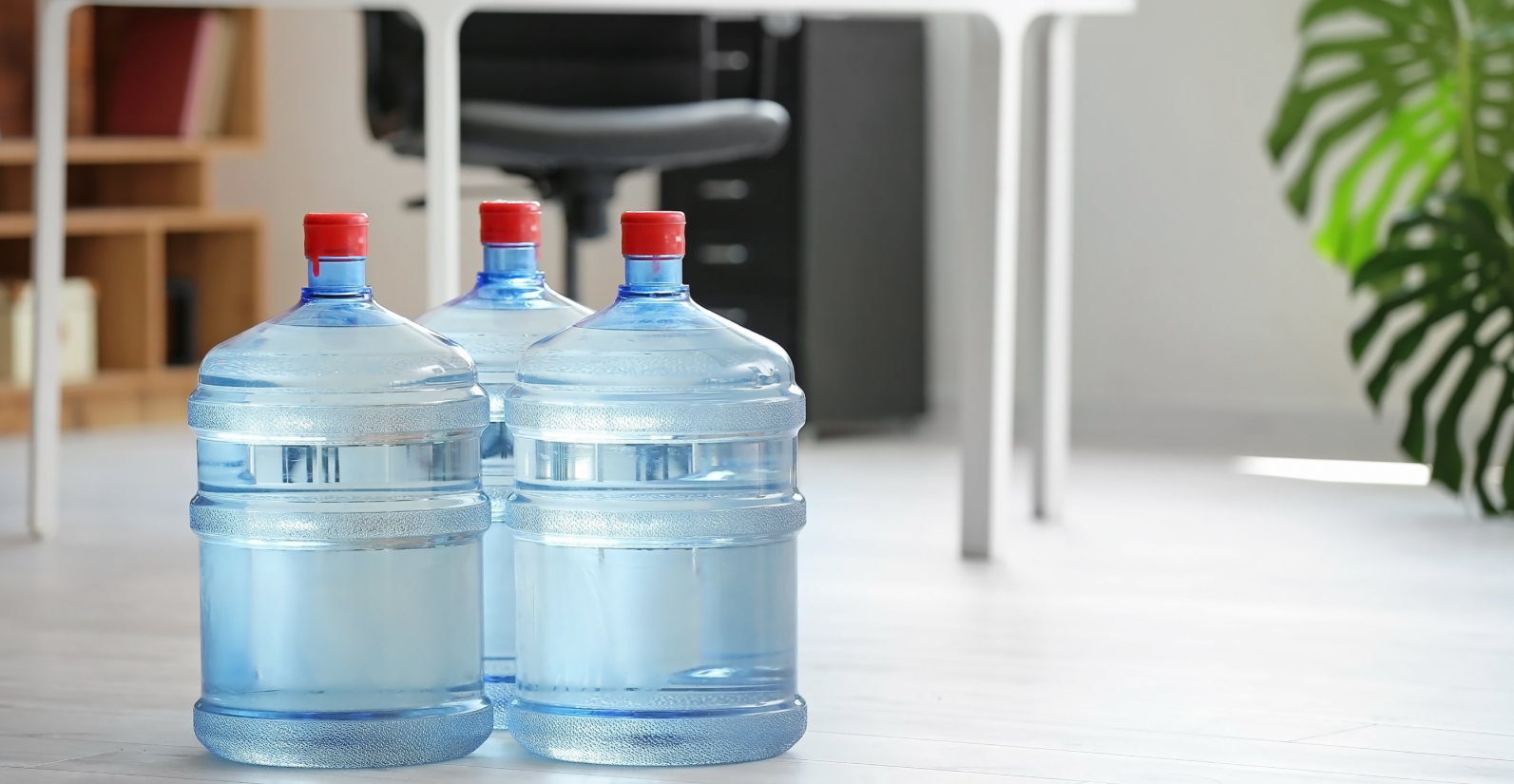
Bottled water remains a familiar sight in offices across the country. It comes in two main formats for workplace use: individual single-serve bottles (typically 16–20 oz) and large 3-to-5-gallon jugs used with a water cooler dispenser. The water inside may be sourced from springs, municipal supplies, or purified through various methods.
While bottled water is convenient, it is the most expensive option per gallon over time and generates substantial plastic waste. Individual bottles work well for conference rooms and client meetings, but they are not recommended as a primary daily water source for an entire office due to the cumulative cost and environmental impact.
Pros
- No installation or plumbing required
- Portable and easy to distribute
- Wide variety of brands and water types
- Ideal for meetings, events, and temporary spaces
Cons
- Most expensive option per gallon over time
- Significant plastic waste and environmental impact
- Requires storage space for backup bottles
- Heavy jugs can cause lifting injuries
- Ongoing delivery logistics to manage
Best for: Small offices, temporary workspaces, conference rooms, buildings without plumbing access
4 Spring Water
Spring water is sourced from natural underground springs where water flows to the surface on its own. It is collected at the spring or from a borehole that taps into the underground formation. The FDA requires that spring water retain the same composition and quality as the water that flows naturally from the spring source.
Many people prefer spring water for its clean, naturally refreshing taste, which comes from the minerals it picks up as it passes through layers of rock and soil. For offices that want to offer employees a premium water experience without the complexity of alkaline or specialty waters, spring water delivered in 5-gallon jugs is a solid middle-ground option.
Pros
- Naturally sourced with a clean, crisp taste
- Contains beneficial trace minerals
- Widely available through delivery services
- Perceived as a premium option by employees
Cons
- Higher cost than tap or filtered water
- Environmental concerns with sourcing and transport
- Quality varies by brand and source location
Best for: Offices that value natural sourcing and are willing to pay a premium for taste
5 Mineral Water
Mineral water comes from a geologically and physically protected underground source and contains at least 250 parts per million of total dissolved solids (TDS) — including minerals and trace elements like calcium, magnesium, and potassium. Unlike spring water, its mineral composition is consistent and naturally occurring, not artificially added.
In an office setting, mineral water is typically offered as a premium perk rather than a primary hydration source. It pairs well with executive dining areas, client-facing lounges, or wellness-focused workplaces. The higher mineral content gives it a distinctive taste that some people love and others find too heavy.
Pros
- Rich in beneficial minerals (calcium, magnesium)
- Distinctive, premium taste profile
- No artificial additives required
Cons
- Among the most expensive water types
- Taste is polarizing — not everyone enjoys it
- Typically only available in bottles
Best for: Executive suites, client entertainment, and wellness-focused workplaces
6 Purified Water
Purified water has been mechanically filtered or processed to remove impurities and contaminants. The source can be tap water, groundwater, or any other supply — what makes it “purified” is the treatment process, which may include reverse osmosis, distillation, deionization, or carbon filtration. To be labeled purified, the water must meet strict purity standards set by the U.S. Pharmacopeia, with no more than 10 parts per million of total dissolved solids.
Purified water is what you’ll find inside many popular bottled water brands, and it’s also what bottleless office water coolers produce when they filter your building’s tap supply. It offers a clean, neutral taste that appeals to the widest range of palates — making it one of the most practical choices for a diverse office environment.
Pros
- Extremely clean — meets strict purity standards
- Neutral taste that suits most preferences
- Available through both bottled delivery and filtration systems
- Removes virtually all contaminants
Cons
- Processing removes beneficial minerals along with contaminants
- Bottled purified water has the same cost and waste issues as other bottled options
Best for: Any office — especially those with sensitive water quality concerns
Ready to Compare Office Water Prices?
Get free, no-obligation quotes from top-rated office water service providers in your area.
COMPARE WATER SERVICE PRICES7 Distilled Water
Distilled water is produced by boiling water into steam and then condensing that steam back into liquid form. This process removes virtually all minerals, chemicals, and contaminants, resulting in the purest form of water available. Total dissolved solids in distilled water are near zero.
In most office environments, distilled water is not used as a primary drinking source because it lacks minerals and can taste flat. However, it has important applications in offices that use humidifiers, steam irons, CPAP machines, laboratory equipment, or autoclaves. Some offices keep a supply of distilled water on hand for equipment maintenance while offering a different type for employee drinking.
Pros
- Purest water available — free of all minerals and contaminants
- Essential for certain equipment (humidifiers, lab tools, medical devices)
- Prevents mineral buildup in appliances
Cons
- Flat, bland taste — not ideal for drinking
- Stripped of all beneficial minerals
- More expensive than tap or filtered water
Best for: Office equipment maintenance, labs, and medical settings — not typically for drinking
8 Sparkling Water
Sparkling water is water that has been infused with carbon dioxide gas under pressure, creating the effervescent bubbles that make it a refreshing alternative to still water. It may be naturally carbonated from a mineral spring, or it may be artificially carbonated (which is the case with most office sparkling water dispensers and seltzer brands).
Sparkling water has surged in popularity as a workplace perk. Many modern bottleless office water dispensers now include a built-in carbonation feature, allowing employees to get still or sparkling water from the same machine. Flavored sparkling water options — with natural citrus or berry essences — are also gaining traction in progressive office environments. Providing sparkling water is a relatively low-cost way to make the break room feel more premium.
Pros
- Refreshing alternative to still water and sugary sodas
- Can increase overall water intake among employees
- Available through dispensers with built-in carbonation
- Flavored varieties add variety without added sugar
Cons
- Dispensers with carbonation cost more than still-only models
- Carbonation requires CO2 canister replacements
- Some people experience bloating or digestive discomfort
Best for: Offices looking to offer a wellness-oriented perk, tech companies, creative agencies
9 Alkaline Water
Alkaline water has a pH level above 7 — typically between 8 and 9.5 — compared to regular tap water, which usually falls around 6.5 to 7.5. The higher pH is achieved either naturally, through contact with mineral-rich rocks, or artificially through an ionization process that uses electrolysis to separate water molecules into acidic and alkaline components.
Proponents claim that alkaline water can reduce acid reflux, improve hydration, boost metabolism, and even slow aging. However, it is important to note that most of these claims lack strong scientific backing. The human body is highly effective at regulating its own pH levels regardless of what you drink. That said, some employees genuinely prefer the smoother taste of alkaline water, and offering it can be a nice touch in wellness-focused workplaces.
Pros
- Smooth, slightly sweet taste some people prefer
- Perceived health benefits boost employee satisfaction
- Available via bottled delivery or alkaline dispensers
Cons
- Health claims are largely unproven by peer-reviewed research
- More expensive than regular filtered water
- Alkaline dispensers require specialized equipment
Best for: Wellness-focused offices, gyms, and health-conscious workplaces
10 Hydrogen Water
Hydrogen water is regular water that has been infused with extra molecular hydrogen (H2) gas. Proponents suggest that the dissolved hydrogen acts as a powerful antioxidant that can reduce inflammation, boost energy, and improve recovery after exercise. It is one of the newest entrants into the office water market.
While some early studies have shown promising results — particularly around athletic recovery and reducing oxidative stress — hydrogen water is still considered an emerging category. It is significantly more expensive than other water types and typically requires specialized equipment or pre-packaged aluminum pouches to maintain the hydrogen concentration. For most offices, hydrogen water is a niche luxury rather than a practical primary water source.
Pros
- Potential antioxidant and anti-inflammatory benefits
- Growing body of early scientific research
- Unique, cutting-edge wellness perk
Cons
- Very expensive compared to other office water options
- Limited long-term scientific evidence
- Requires specialized equipment or pre-packaged products
- Hydrogen dissipates quickly once container is opened
Best for: Forward-thinking wellness companies and high-end executive suites
Quick Comparison: All 10 Types of Office Water
Use this side-by-side comparison to evaluate which type of water makes the most sense for your office based on cost, taste, health benefits, and environmental impact.
| Water Type | Cost (Office) | Taste | Filtration | Eco-Friendly | Best For |
|---|---|---|---|---|---|
| Tap Water | Free | Varies | None | 5/5 | Budget offices |
| Filtered Water | $35-$75/mo | Excellent | Multi-stage | 5/5 | Most offices |
| Bottled Water | $6-$10/jug | Good | Varies | 2/5 | Small/temp offices |
| Spring Water | $7-$12/jug | Very Good | Natural | 2/5 | Premium offices |
| Mineral Water | $1.50-$4/L | Distinctive | Natural | 2/5 | Executive/client areas |
| Purified Water | $6-$10/jug | Clean/Neutral | Advanced (RO/UV) | 4/5 | Any office |
| Distilled Water | $1-$2.50/gal | Flat | Distillation | 3/5 | Equipment/labs |
| Sparkling Water | $50-$100/mo | Refreshing | Filtered + CO2 | 4/5 | Modern/creative offices |
| Alkaline Water | $2-$4/bottle | Smooth | Ionized | 3/5 | Wellness-focused |
| Hydrogen Water | $3-$6/serving | Neutral | H2 infused | 3/5 | Cutting-edge wellness |
Office Water Dispensers: Choosing the Right Equipment
The type of water you choose is only half the equation. How you dispense it matters just as much. The right dispenser affects convenience, maintenance effort, space usage, and overall employee experience.
Bottled Water Coolers (Top-Load)
The classic office water cooler uses inverted 3-to-5-gallon jugs placed on top of the unit. They are inexpensive to set up, require no plumbing, and can be placed anywhere with an electrical outlet. The downside is the ongoing cost of bottle delivery, the need to store extra jugs, and the physical effort required to lift and replace heavy bottles.
Bottom-Load Water Coolers
These work the same way as top-load coolers but position the water jug inside a cabinet at the base of the unit. An internal pump draws water upward. This eliminates the heavy lifting associated with traditional coolers and creates a cleaner, more polished look ideal for reception areas and client-facing spaces.
Bottleless (Point-of-Use) Dispensers
Bottleless dispensers connect directly to your building water supply and use built-in filtration to deliver purified water on demand. They eliminate the need for bottle deliveries entirely, producing unlimited filtered water for a flat monthly fee. Many models offer hot, cold, and room-temperature settings and some include sparkling water as well. This is the most popular dispenser type for mid-size to large offices in 2026.
Countertop Dispensers
Compact units designed to sit on a counter or tabletop. They work well for small offices, break rooms, or conference areas where floor space is limited. Some connect to the water line; others use small refillable reservoirs.
Under-Sink Filtration Systems
These systems install beneath the counter and deliver filtered water through a dedicated faucet. They are invisible to users, preserve counter and floor space, and work well in kitchenettes and executive areas where aesthetics matter.
Not sure which dispenser fits your office? The best approach is to get quotes from multiple providers and compare equipment, filtration quality, and ongoing service costs side by side.
How to Choose the Right Type of Water for Your Office
With 10 types of water and several dispenser options to choose from, narrowing down the best solution for your specific office can feel overwhelming. Here is a practical framework to simplify the decision:
1. Assess Your Office Size and Daily Consumption
A 10-person startup has very different needs than a 200-person corporate headquarters. Smaller teams may do just fine with a bottled water cooler or countertop dispenser. Larger offices will benefit from the unlimited supply and lower per-gallon cost of a bottleless filtration system.
2. Check Your Building Water Quality and Infrastructure
Request a water quality report from your municipal supplier or test your tap water directly. If your building has older plumbing that may leach lead or other metals, a filtration system with the appropriate certifications is essential. If your office lacks accessible plumbing for a point-of-use hookup, bottled delivery may be the more practical route.
3. Set a Realistic Budget
Consider both upfront and ongoing costs. Bottled water delivery may seem cheaper at first, but the per-gallon cost adds up quickly for larger teams. Bottleless coolers have a slightly higher initial investment but typically save 30 to 50 percent compared to bottled water over the course of a year.
4. Factor in Sustainability Goals
If your company prioritizes environmental responsibility, eliminating single-use plastic bottles should be a top consideration. Bottleless dispensers, tap water with filtration, and refillable glass or stainless steel bottles are all ways to reduce your office plastic footprint.
5. Consider Employee Preferences
Poll your team. Do they want sparkling water? Hot water for tea? Flavored options? Understanding what your employees actually want helps you invest in a solution they will actually use, which maximizes the return on your water service investment.

Compare Office Water Service Prices
Do not overpay. Get free quotes from vetted office water service providers and find the best price for your workplace.
GET FREE QUOTES NOWHow Office Water Impacts Workplace Productivity
The connection between hydration and productivity is well-documented. Even mild dehydration, losing as little as 1 to 2 percent of your body water content, can impair cognitive function, reduce concentration, and negatively affect mood. In a typical 8-hour workday, the cumulative effect of inadequate hydration can lead to measurable drops in output and focus.
Studies have found that properly hydrated workers report higher energy levels, improved short-term memory, and better overall mood compared to dehydrated peers. Employers who invest in accessible, high-quality drinking water are making a direct investment in their team ability to perform.
Beyond individual productivity, the office water dispenser itself can play a social role. The traditional water cooler conversation is more than a cliche. It represents an informal space where colleagues connect, share ideas, and build relationships that strengthen workplace culture.
Providing clean, accessible drinking water is one of the simplest and most cost-effective ways to support employee health, boost productivity, and demonstrate that your company values its team.
Frequently Asked Questions About Types of Office Water
Filtered water is widely considered the best option for most offices. It removes impurities from your existing tap supply, delivers consistent taste, and is far more cost-effective than bottled water over time. Offices with 50 or more employees often save ,200 to ,000 per year by switching from bottled delivery to a bottleless filtration system.
Costs vary by service type. Bottled water delivery typically runs to 0 per 5-gallon jug plus cooler rental fees. Bottleless (filtered) water coolers typically cost 5 to 5 per month, which includes unlimited filtered water, installation, and maintenance. For a detailed pricing breakdown, see our office water service price comparison guide.
Tap water in the United States is regulated by the EPA and is generally considered safe for drinking. However, water quality can vary by location and building age. Older plumbing systems may introduce lead or other contaminants into the water. Using even a basic filtration system on top of your tap water is a smart, low-cost way to ensure quality and improve taste.
The main types of office water dispensers include top-load bottled water coolers, bottom-load bottled coolers, bottleless point-of-use dispensers (which connect to your water line), countertop units, under-sink filtration systems, and wall-mounted dispensers. Each type serves different office sizes, budgets, and space constraints. Bottleless point-of-use dispensers are the most popular option for mid-to-large offices in 2026.
Filtered water is generally the better long-term choice. It eliminates ongoing bottle delivery costs, reduces plastic waste, requires less storage space, and provides unlimited clean water on demand. Bottled water may be preferable for small offices with fewer than 10 employees, temporary workspaces, or buildings where plumbing access is not available for a filtration hookup.
Yes. Research has shown that even mild dehydration can impair concentration, memory, and mood. Providing easy access to clean drinking water helps employees stay hydrated, focused, and productive throughout the workday. It is one of the simplest and most cost-effective workplace wellness investments an employer can make.
Alkaline water has a pH level higher than regular tap water, typically between 8 and 9.5. While some proponents claim it offers health benefits like reduced acid reflux and improved digestion, these claims are not strongly supported by peer-reviewed scientific evidence. It can be a nice perk in wellness-focused offices, but filtered or purified water is a more practical primary option for most workplaces.
Most water service providers recommend sanitizing office water coolers every 3 to 6 months. Many full-service plans include cleaning and sanitation as part of the monthly fee. If you own your cooler outright, follow the manufacturer guidelines or hire a professional service to ensure proper hygiene is maintained.
Find the Best Office Water Solution for Your Team
Compare quotes from top-rated office water service providers. Free, fast, and no obligation.
COMPARE OFFICE WATER SERVICE PRICES